What Esogetic Medicine sees in PTSD — and how it can help your child

From an Esogetic perspective, PTSD is arrested development of the soul. Something happened that the person couldn't process — and the brain began storing those experiences in a way that makes it almost impossible to move forward.
The brain areas responsible for emotional processing — including the hippocampus, amygdala, and corpus callosum — can actually shrink under chronic stress. The hippocampus is where we store autobiographical memory, our ability to think independently and be ourselves. When it's under pressure, it becomes very hard to think outside of our familiar patterns, no matter how much someone wants to change.
This is why talking about trauma doesn't always help. The body is holding something the mind can't fully reach.
Why children need a different approach
Most PTSD treatments in Esogetic Medicine use grey light and brainwave frequencies — and these are not appropriate for children, whose systems are still developing. For kids, we return to simpler prenatal treatments, working with the body's foundational layers rather than pushing deeper processing before their body is fully developed.
Before applying any treatment, I look at the person's Kirlian photo to assess what they need and are ready for. This matters more than the diagnosis. Two children with the same presenting behaviour can need completely different support — and applying the wrong treatment at the wrong time can back the system up further rather than opening it.
A real example - my youngest starting to attend public school in grade 1, because she wasn't ready to attend when she was in kindergarten:

When my youngest began public school, her Kirlian photo told a clear story:
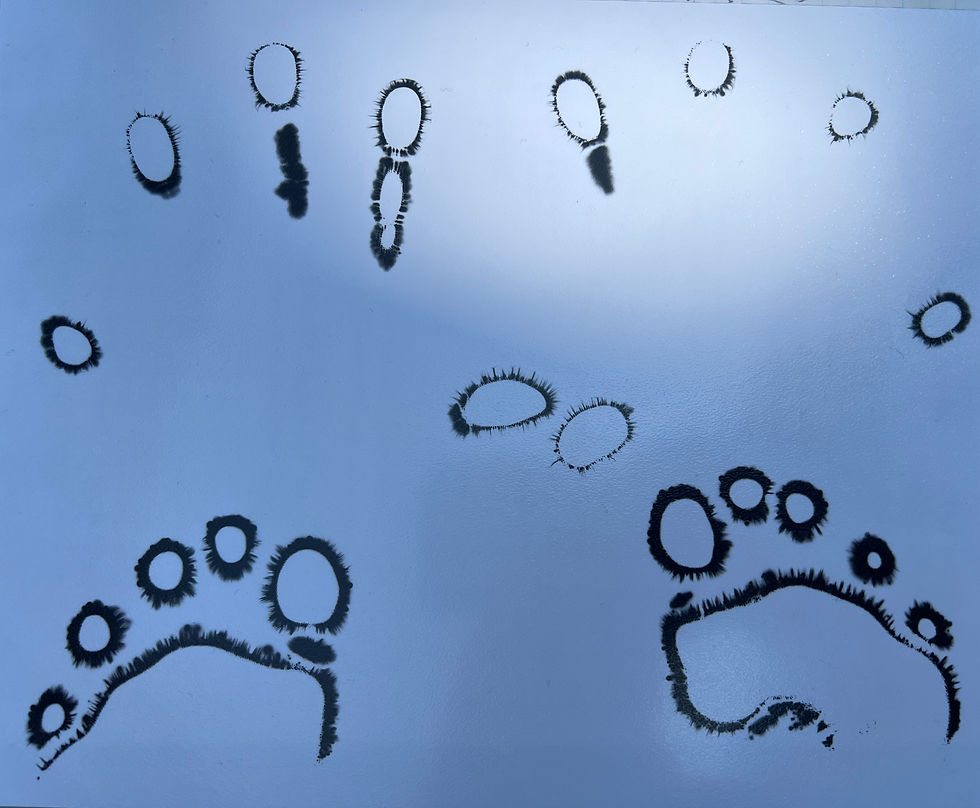
I could see signs of anxiety in how she was holding her digestive system, attachment patterns in her fingers, stress in her world-views (is the world safe, can I navigate it), and congestion that told me her body wasn't yet open enough to process more — it needed to be able to release first:
Her symptoms made sense in this context: tummy aches, sugar crashes, urgently needing the bathroom, asking for food and then not wanting it when it arrived. These weren't random. They were her nervous system communicating exactly what was happening.
I applied a gentle treatment sequence aimed at opening her system to processing rather than forcing anything to come to the surface:
Her photo after treatment showed the shift:
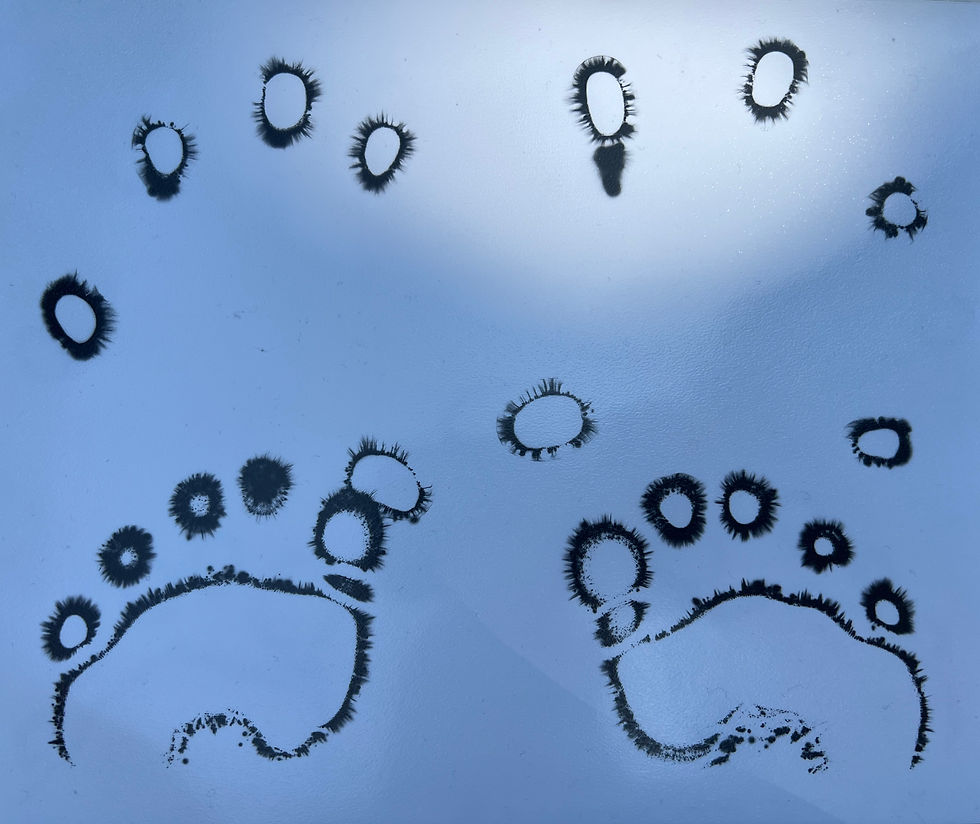
...less congestion at the back of her thumbs, fewer lines pulling down from her fingertips. She was starting to let go. While some areas of this photo are darker than before, this isn't always a sign that things have gotten worse, sometimes it just means that the emotions that were frozen are now being stirred up to be processed, which is what will help them move.
She continued to make progress at school — making friends, wanting to go more. She also had harder days at home, as she worked through the conflict of gaining independence while losing constant access to me. Both are part of the same process.
What parents often don't realize
Having done this work, I noticed something shift in me too. I wasn't bracing for the next difficult moment. I wasn't judging myself or other parents. I felt steadier, more present.
Parents often need support alongside their children. Kids will do all kinds of things to try to make their parents feel better — and when we as parents are regulated, kids have more room to just be.
This work is not about fixing the child, it's about helping the whole family system find more room to breathe.
If this resonates
If your child's behaviour has been confusing, cycling, or not responding to what you've tried — and you want to understand what might be underneath it — I'd love to help.
→ Learn more about Kirlian Photography and Esogetic Medicine
→ Learn more about supporting your child through the Parent-Child hub


Comments